
How Bench Warrants Work in Maricopa County
Think of a bench warrant as arrest authority handed down from the bench itself. It follows a missed court obligation, not a new charge. In Maricopa County, the usual triggers are missed hearings, probation violations, failure to comply, and restitution nonpayment under A.R.S. §13-810. There is no separate public database for it. A Maricopa County bench warrant stays alive until an arrest or action by the issuing judicial officer. A prosecutor can request action but cannot quash it alone. Hits from Arizona DPS, MCSO, or a docket are just leads. The court's current file controls. That file alone says whether the warrant is still active and what will resolve it.
From a Missed Maricopa Hearing to a Warrant
One missed hearing does not read the same in every Maricopa County docket. A Justice Court case may split the calendar event, the disposition, the warrant issuance, and later action into separate rows. A Superior Court matter can route through a criminal division or Probation Violation Court. A city case stays with its own Municipal Court.
- Confirm the date, case number, and court on the notice.
- Read later docket events, not only the first FTA entry.
- Call the issuing court and ask whether a bench warrant is active.
- Ask whether a motion, new date, walk-in, bond, payment, or counsel is required.
- Keep the resulting order and recheck after processing.
Bench Warrant Issuance in Maricopa County
The record has to support nonappearance or noncompliance first. Then a Maricopa County judicial officer issues the bench warrant. Superior Court guidance points to a missed scheduled hearing, including one tied to probation, as the common trigger. Justice and Municipal Courts issue warrants too, within their own limited jurisdiction. The issuing court picks the counter, not your home address. Arizona rules may favor a summons instead. A later failure to appear can still support a warrant. Summons, citation, civil default, and bench warrant are not interchangeable. The docket and clerk can say which event occurred, and if the file involves restitution, probation, or release conditions, talk with counsel before acting on a brief online label.
Twenty-Six Justice Precincts Change the Route
Maricopa County Justice Courts spread across 26 precincts. Each runs Monday through Friday, 8 a.m. to 5 p.m., excluding holidays. Where you live barely matters. Traffic cases are heard where the violation occurred, so the filing precinct may not be the court nearest your home.
Start with the official precinct locator and your case number. Administration and the Video Appearance Center are not filing courts. Phone and location details can shift, and one West Mesa number differs between listings, so let the live precinct page control before you travel.
How Bench and Arrest Warrants Differ
Both types authorize custody in Maricopa County. Knowing the difference helps you ask the right question of the right court, since the label alone never decides the case.
| Feature | Bench warrant | Arrest warrant |
|---|---|---|
| Typical basis | Missed appearance or failure to obey a court order | Sworn probable-cause showing tied to an alleged offense |
| Issuer | Judge, magistrate, commissioner, or justice of the peace | Judicial officer acting on sworn material |
| Where to verify | The court holding the missed obligation | The issuing court and its case file |
| How it ends | Service or court recall, quash, or cancellation | Arrest or issuing-court action |
In Maricopa County, a bench warrant remains a form of arrest authority. Do not confuse it with a search warrant, which authorizes a specific search or seizure.
Maricopa Bench Warrant Docket Terms
Search by case number first in Maricopa County, since names collide and the bench label alone does not identify a court. Read docket terms in order.
- FTA
- Failure to appear at a required setting.
- Warrant issued
- The court entered arrest authority; confirm current status.
- Recalled or quashed
- The judicial officer removed or changed the warrant obligation.
- Return
- A filing that can document service or execution.
- Probation violation
- A Superior Court issue with a separate information route.
A Maricopa County Justice Court view can carry case status, judge, precinct, disposition, calendar, events, and judgments. The warrant may be one row. Later entries can matter more than the issuance line.
Clearing a Bench Warrant in Maricopa County
Call the issuing Maricopa County court before you show up. For Superior Court, the Criminal Department Information Desk is 602-506-8575. Probation Violation Court is 602-372-0427. Ask whether an attorney may file a motion, whether a hearing or walk-in is allowed, whether bond is set, and which document confirms a recall or quash.
Before taking action: Payment alone may leave the FTA, warrant, suspension, or required appearance open; ask what action clears the warrant itself.
Phoenix takes a written quash request with identifying and case information and advises allowing ten days; Mesa separates payment-arrangement warrants from other causes and may require a judge. Chandler offers a written motion or a criminal walk-in. Procedures belong to the named court alone. No Maricopa County shortcut covers them all.
A Maricopa Walk-In Needs Court Direction
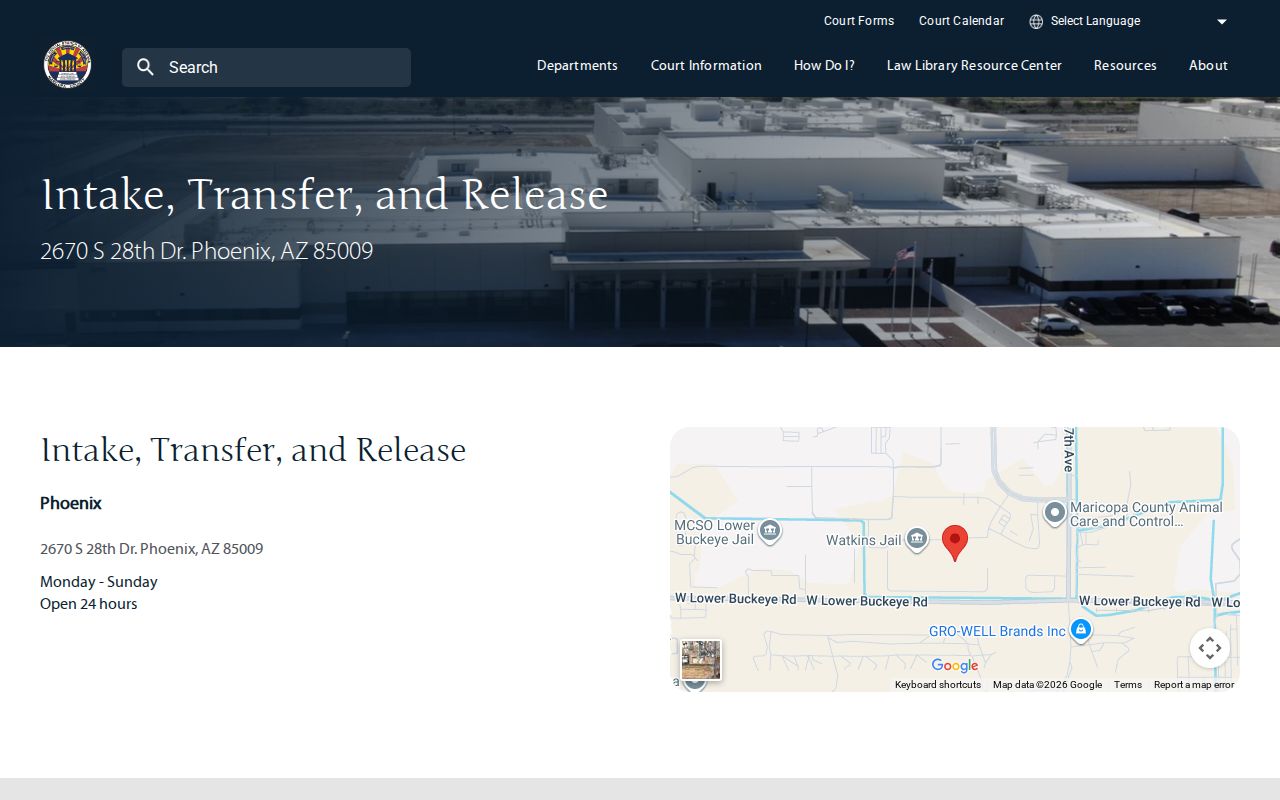
A Maricopa County walk-in needs direction first, so ask what the court requires: identification, paperwork, payment form, bond arrangement, and attorney involvement. If the court directs self-surrender, confirm the facility and the time. The Intake, Transfer and Release facility at 2670 S 28th Drive operates 24 hours. It handles court-directed self-surrenders. It is not a universal warrant-clearing counter. The official ITR location page shows the public logistics without exposing a case record.
Take proper court paperwork. Follow the issuing Maricopa County court's instructions, and consult counsel first for felony, probation, extradition, no-bond, or identity issues.
Maricopa County Courts That Issue Bench Warrants
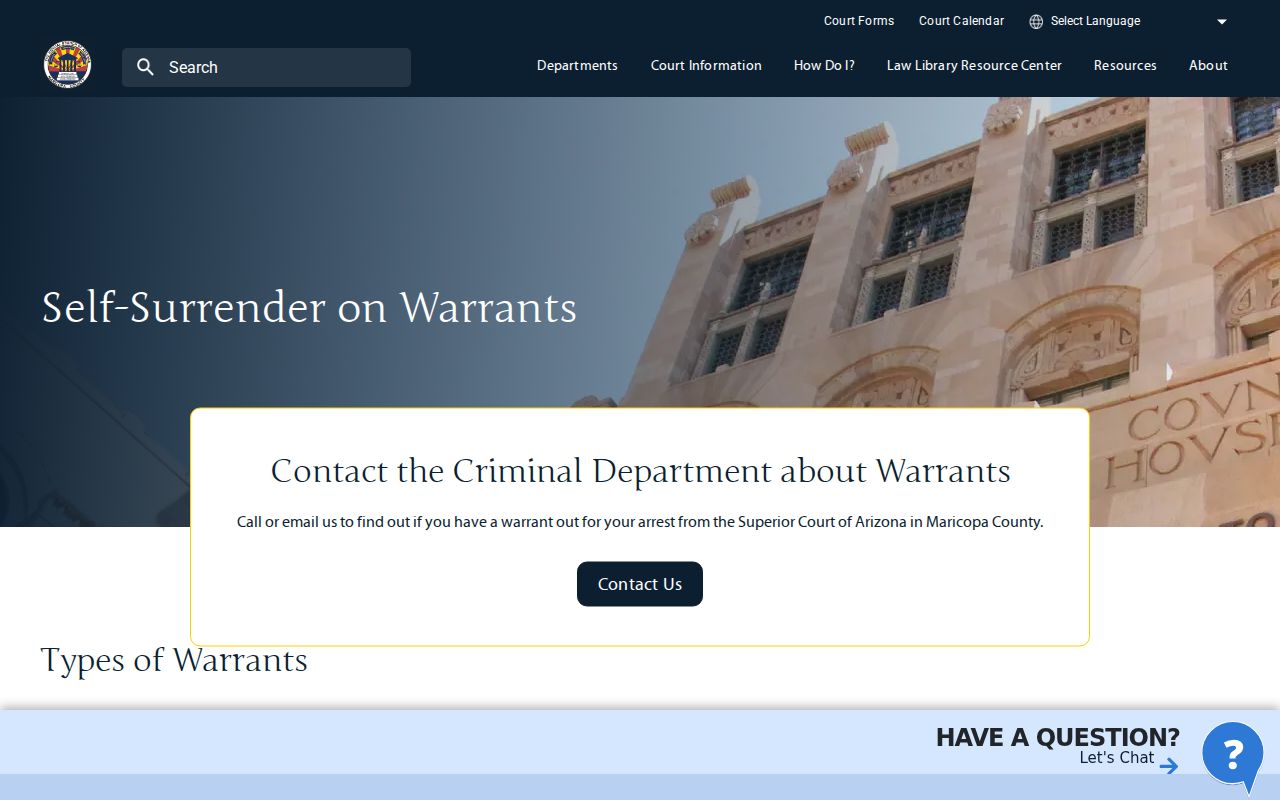
Superior Court handles felonies and appeals. Trial-level criminal matters land there too. Its warrant information page tells people to call or email about a possible Superior Court warrant, stressing that only the issuing Maricopa County court can resolve it.
Maricopa County splits its bench warrant sources by court level. Justice Courts take precinct cases, including criminal traffic. Municipal Courts handle city misdemeanor, traffic, and ordinance matters. A DPS or MCSO result can point you toward the issuing court, and the Arizona case index supplies case events. Neither tool replaces a final call to that named court, and if another state issued the warrant, contact that jurisdiction directly because extradition may be possible.
Keep Proof After Maricopa Warrant Relief
Relief counts only when the Maricopa County court records it. Keep every paper: the file-stamped motion, minute entry, signed recall or quash order, receipt, bond paperwork, release order, and clerk message. Ask the clerk how long updates take. Call back after that period. A payment confirmation alone is not a judicial order, and neither is an attorney's request. Beware urgent payment demands by phone, text, email, social media, QR code, wire, gift card, cryptocurrency, or payment app. Maricopa Superior Court says bond is not requested through those channels. Verify on your own through the issuing court. The broader Maricopa County warrant records overview covers the county and state routes for a final recheck. For copies, the Maricopa County Clerk runs four records centers in Phoenix, Surprise, Mesa, and northeast Phoenix. Public-access computers allow free inspection of open material. Copies cost $0.50 per page. Certification runs $35, and research fees may apply. Closed, sealed, or confidential records cannot be inspected. Those services document the case well, but a direct status question to the issuing judge or clerk still matters most.
A family member helping in Maricopa County should gather the exact legal name, date of birth, case number, court, and known hearing date. Share those details only through an official channel. Ask the clerk to separate the warrant from any related fine, default, registration hold, probation issue, or new hearing date. Write the office and instructions down. If the clerk cannot confirm identity or status, counsel can resolve the mismatch without exposing personal information publicly. The goal is a traceable court disposition. An empty search screen is not that. A Maricopa County criminal traffic FTA needs extra care, since a sample Justice Court schema showed warrant issuance and suspension of operating privilege as distinct events. Civil traffic nonresponse instead produces default and registration-hold consequences. Ask the court to name each open obligation. A payment-plan portal can manage an amount. It does not automatically recall a warrant or replace a required appearance. New Justice Court citations may also take one to two days to reach the payment system, so portal silence right after filing is not proof the obligation is absent.